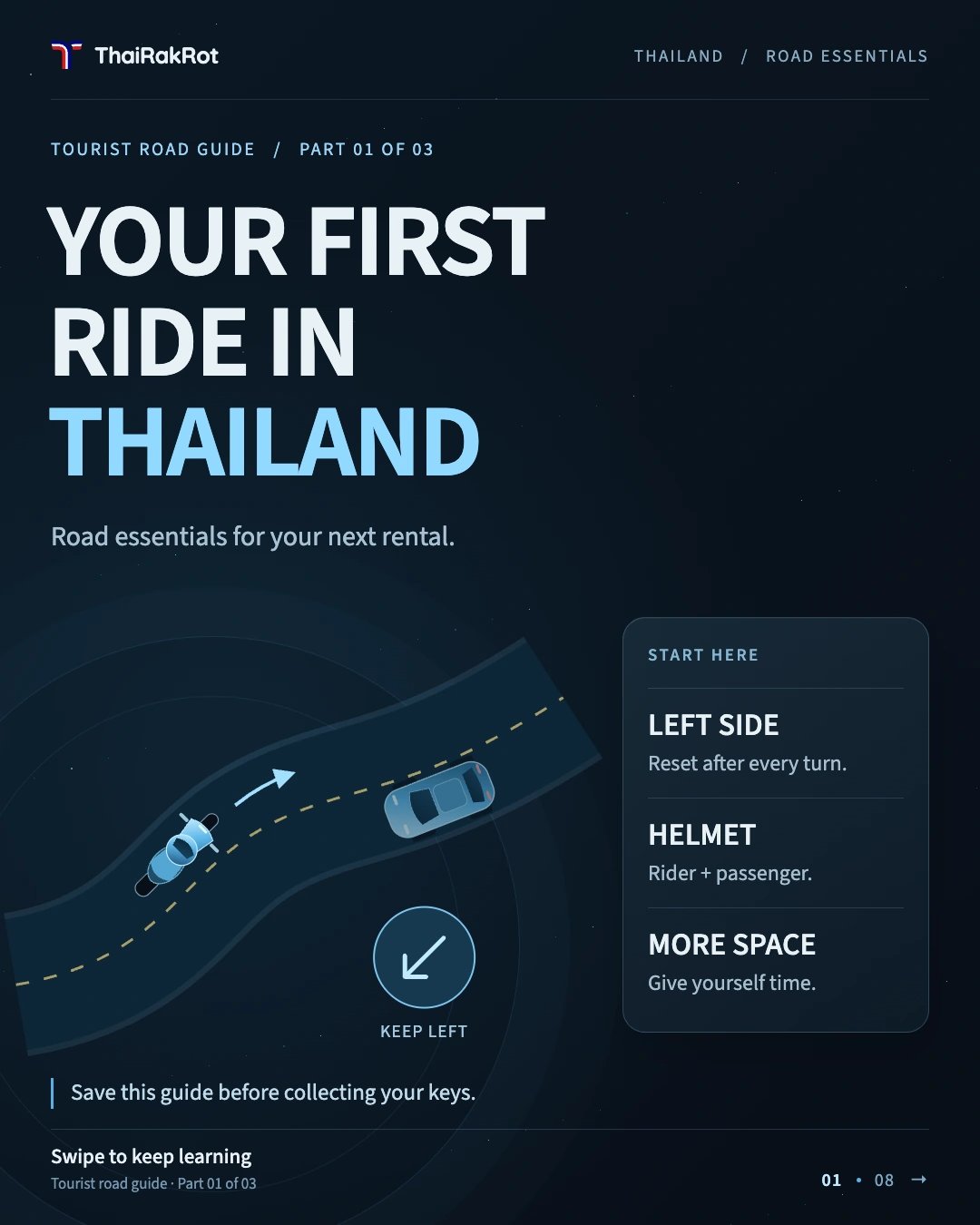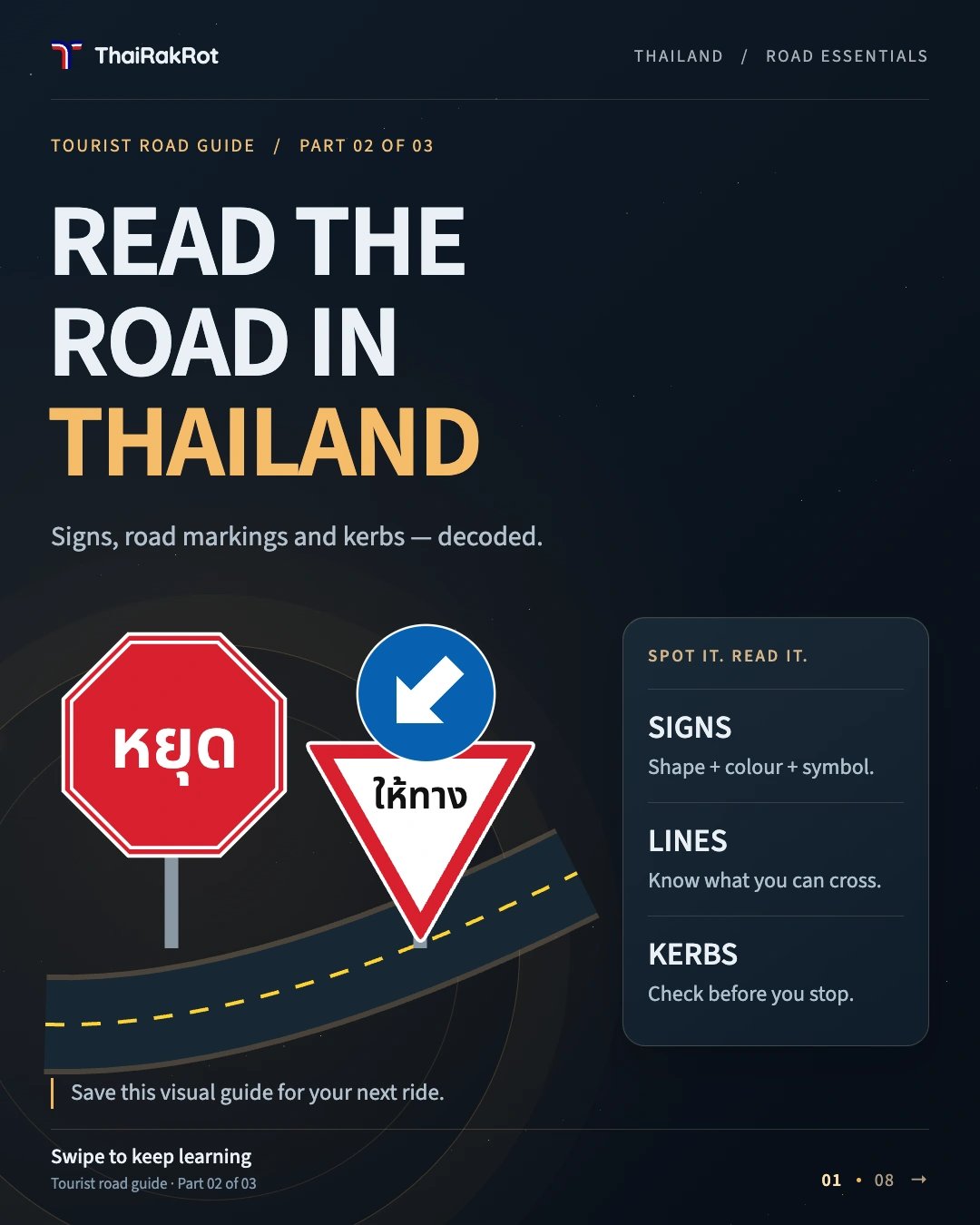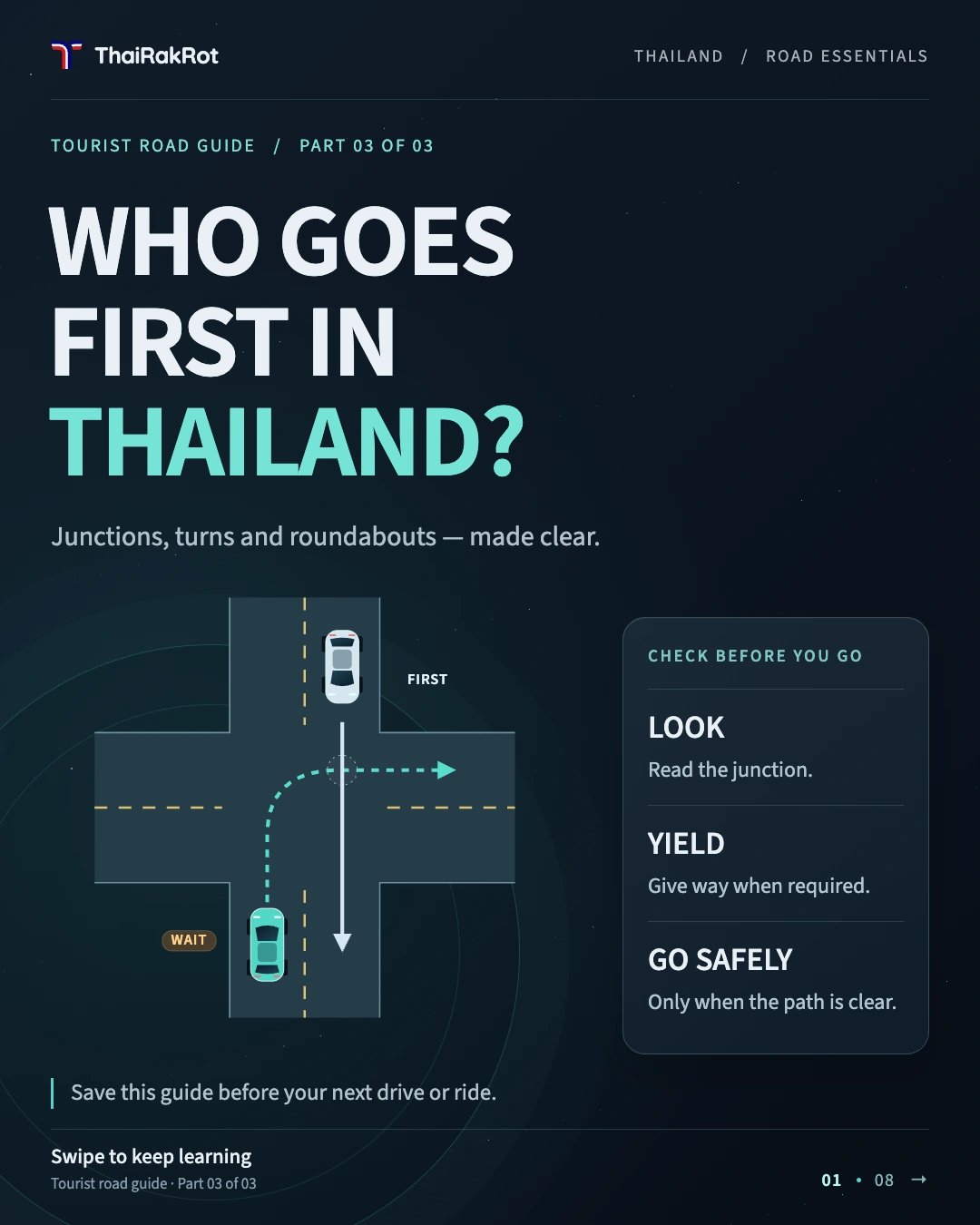
Part 4 of 4
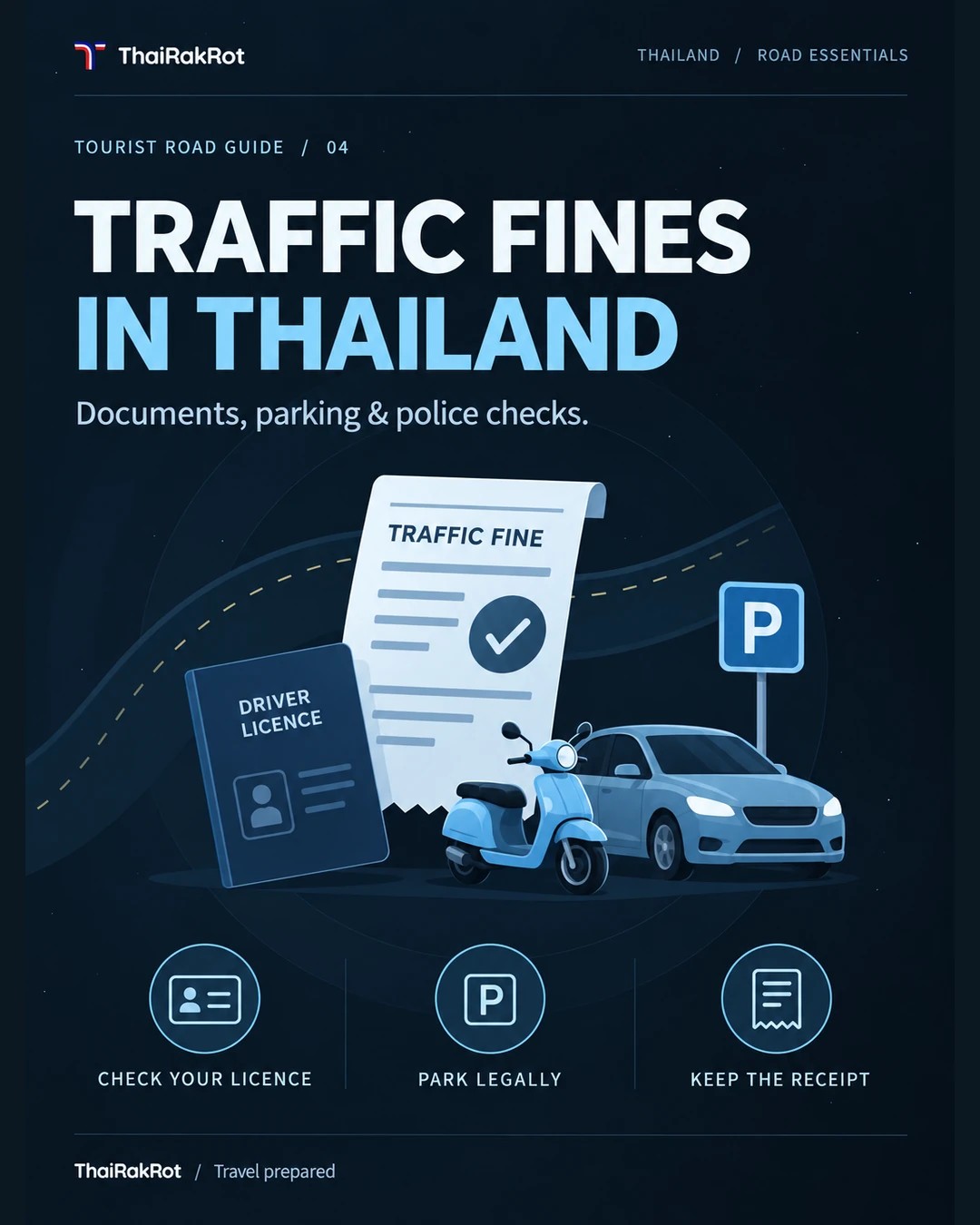
Traffic fines and police checks in Thailand
A practical guide for renting a scooter, motorcycle or car in Pattaya, Phuket and across Thailand: driving documents, common fines, parking and official ticket payments.
Read the guide8 illustrated cards in English, with the main points below. Select an illustration to open it at full size.
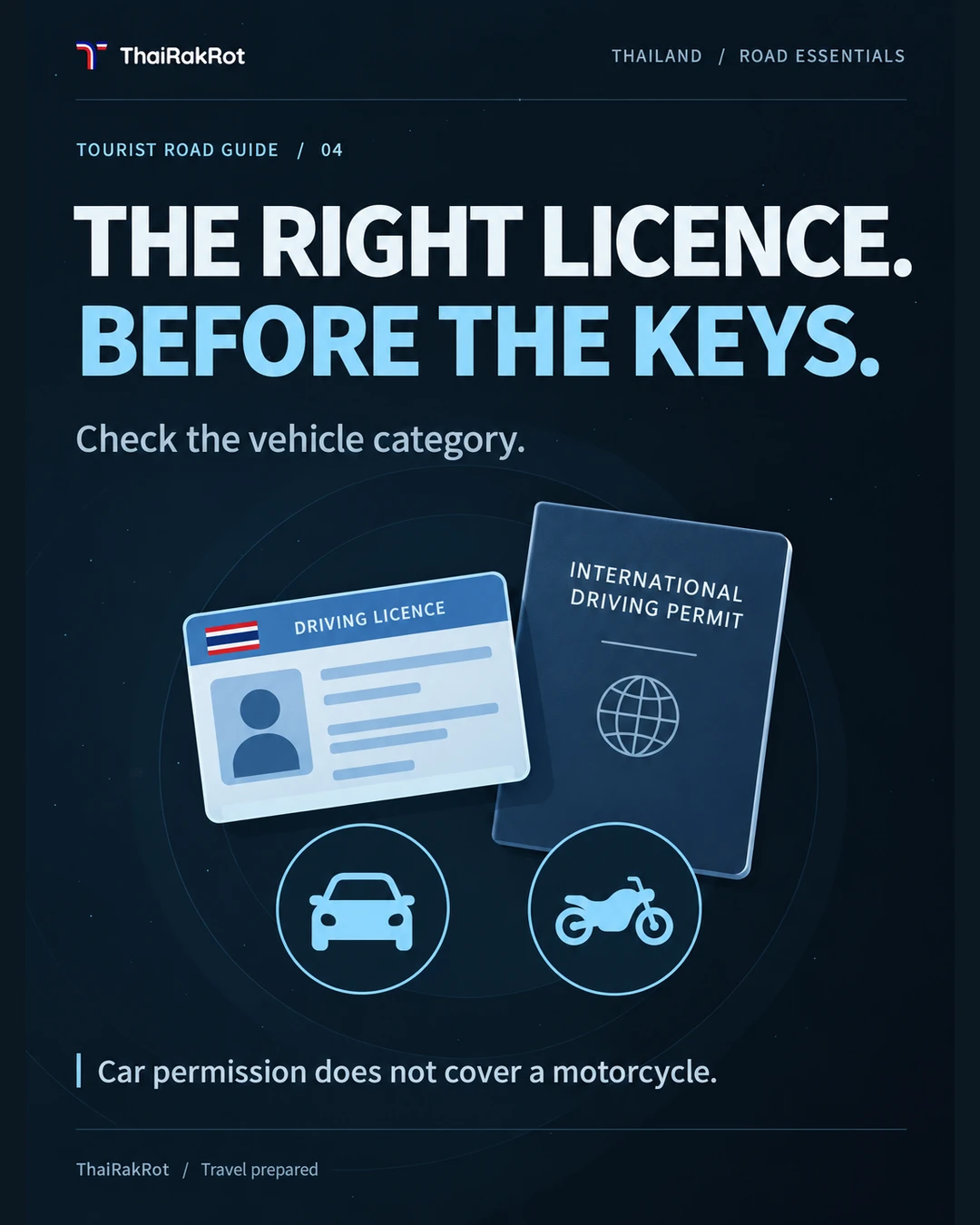
Carry the right driving documents
Before collecting the keys, check that your licence is valid in Thailand for the vehicle you will drive. Visitors using an International Driving Permit should carry it with their original national licence. Valid Thai licences and recognised ASEAN licences are also accepted. A car-only entitlement does not cover a motorcycle or motor scooter. Keep your rental agreement and the provider’s contact details accessible, and check the licence conditions in your insurance policy.
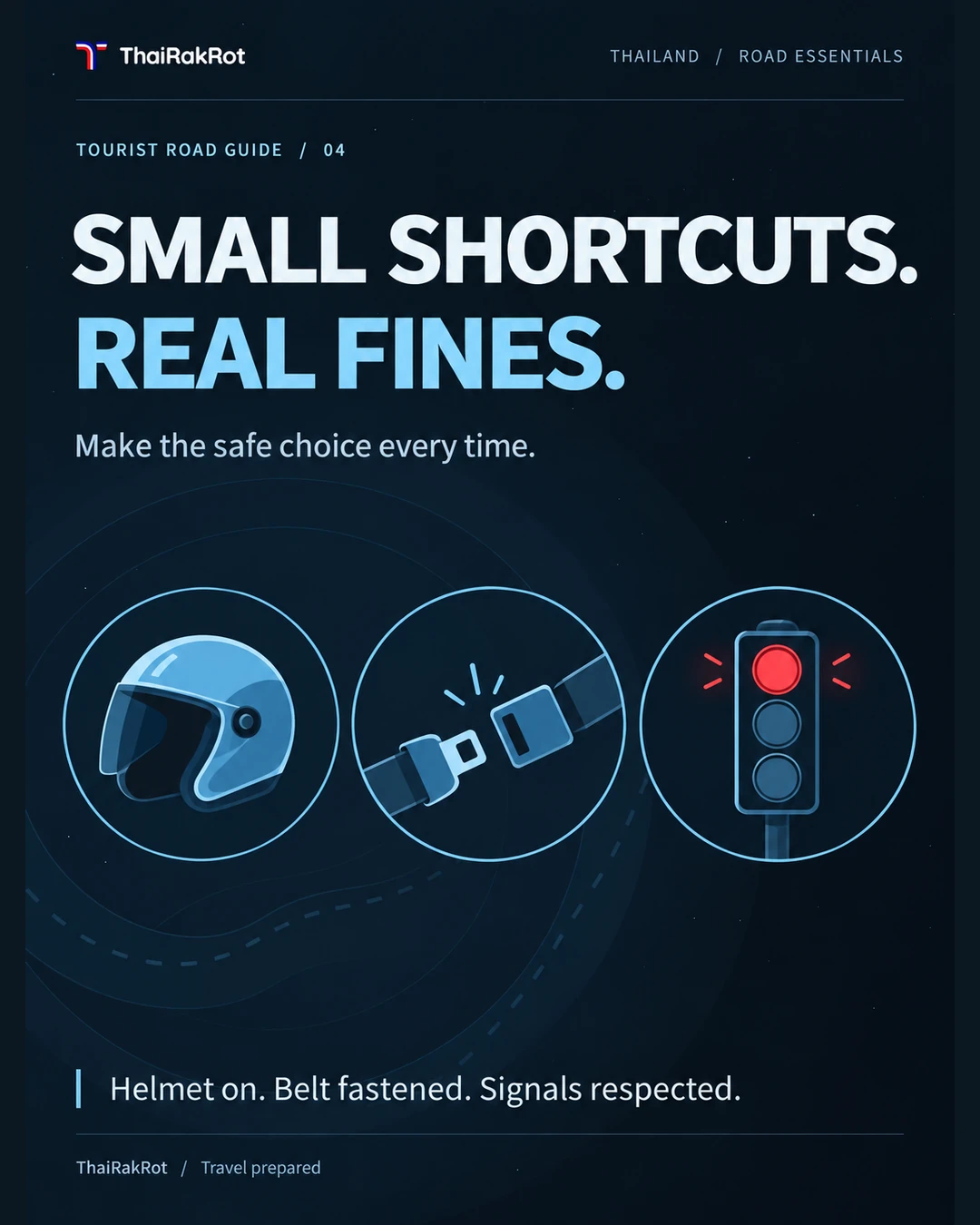
Common offences and maximum fines
Fasten your helmet strap and make sure your passenger wears a helmet too. In a car, use the seat belts; set navigation before moving. The amounts below are upper limits, so the actual ticket can differ. Carrying a passenger without a helmet can double the driver’s helmet penalty. Paying a fine does not make it legal to continue without the required documents or equipment.
- Riding without a helmet
- Up to 2,000 THB
- Not wearing a seat belt
- Up to 2,000 THB
- Exceeding the speed limit
- Up to 4,000 THB
- Running a red light
- Up to 4,000 THB
- Using a handheld phone while driving
- Up to 4,000 THB
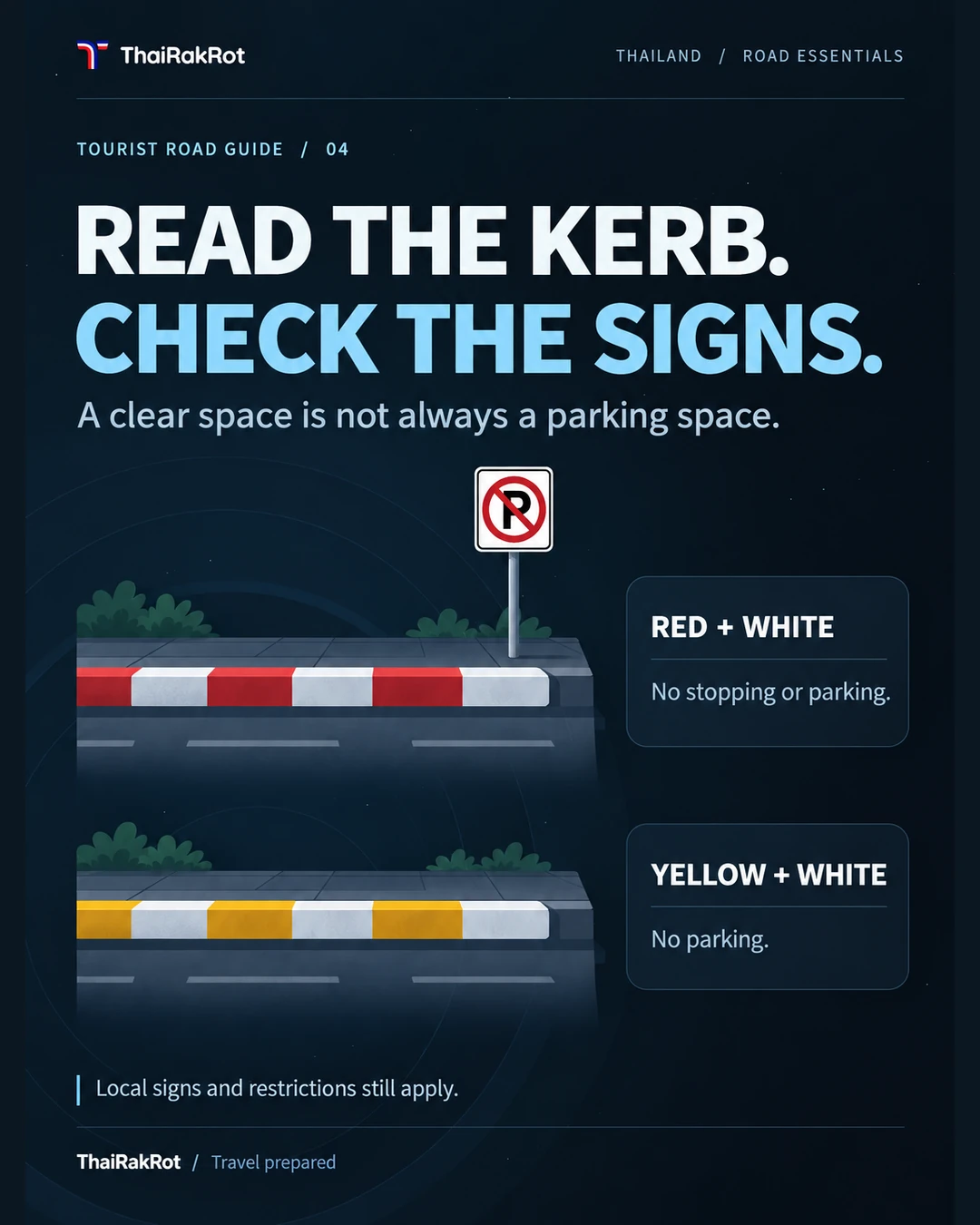
Parking: check the kerb and the whole street
Red-and-white kerbs mean no stopping or parking. Yellow-and-white means no parking; only brief immediate pick-up, drop-off or loading is allowed, subject to other restrictions. An unpainted or black-and-white kerb does not grant permission to park. Read nearby signs for hours and odd/even dates, and keep crossings, driveways and access routes clear. In Pattaya or Phuket, ask your rental point where parking is permitted near your destination.
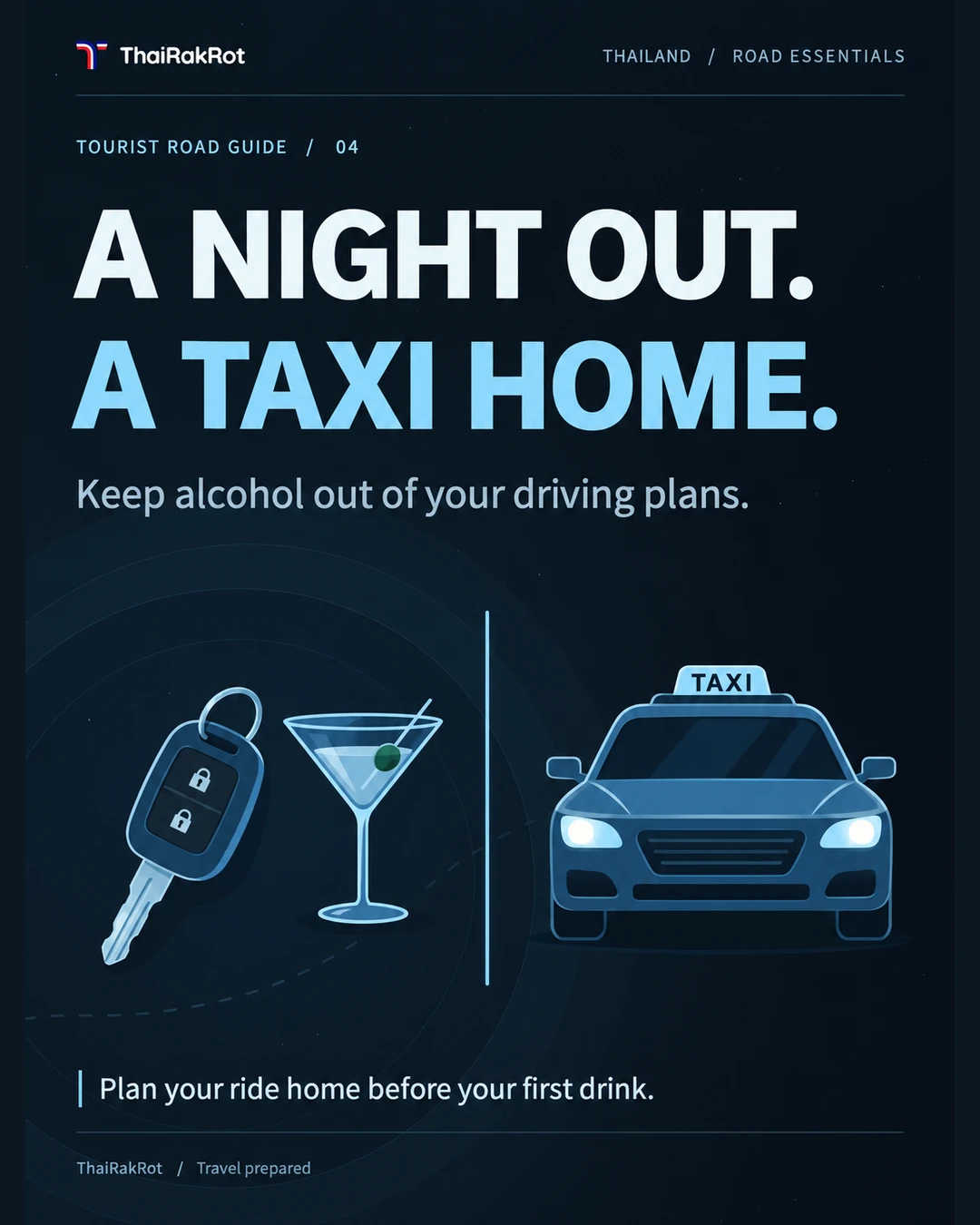
Alcohol: arrange another way home
Plan a taxi or a sober driver before drinking. The general legal threshold is more than 50 mg of alcohol per 100 ml of blood (0.05% BAC). The lower threshold of more than 20 mg/100 ml (0.02%) applies to drivers under 20, temporary licence holders, and people with the wrong category, no licence, or a suspended or revoked licence. These are blood measurements, not mg per litre of breath. Do not convert them into an allowance of drinks: drink-driving can lead to criminal proceedings.
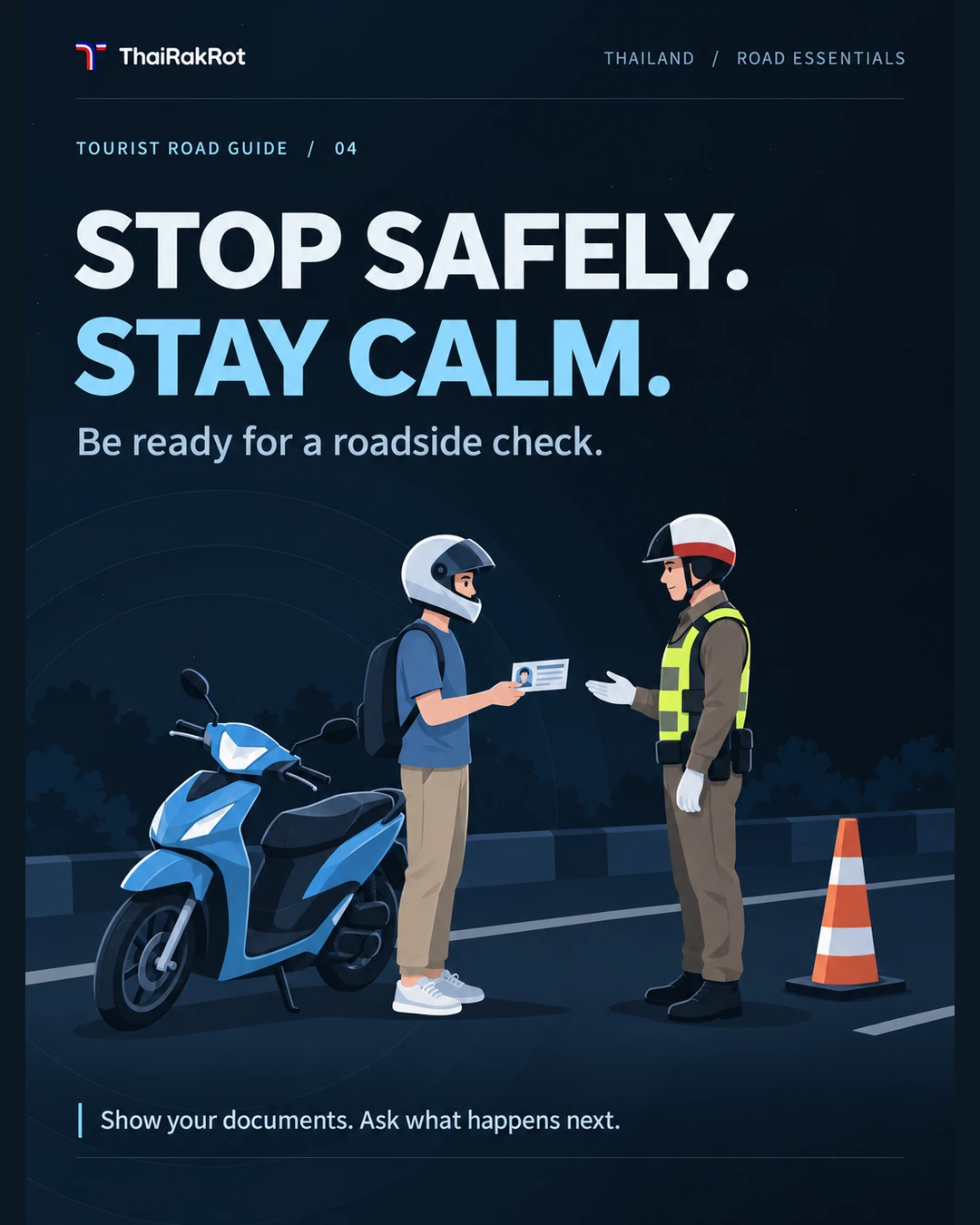
If police stop you
Pull over safely where directed, stop the engine and speak calmly. Have your driving documents ready and show them when requested. Ask which offence is alleged and what the next step is. If you do not understand, request an explanation or contact Tourist Police on 1155 for assistance. Keep your rental provider informed if the vehicle or its documents are involved. Do not offer an informal cash payment to avoid a ticket.
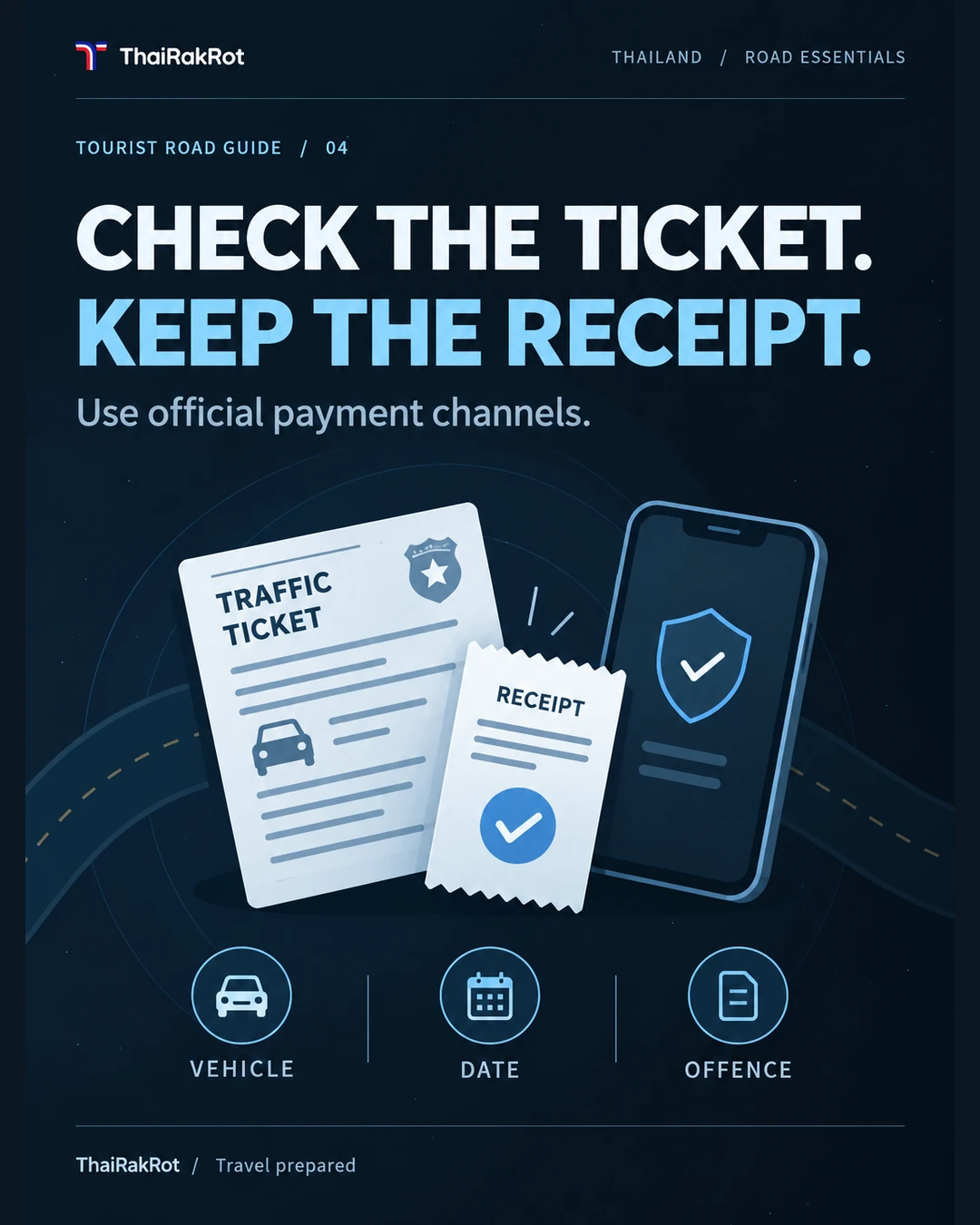
Check, pay and keep the receipt
Check the vehicle registration, date, location, alleged offence, amount and deadline on the notice. Use the issuing police station or an official payment channel shown on the ticket; online services can require local registration or a Thai bank account. Keep the receipt and share a copy with the rental provider if needed. Do not follow payment links in unsolicited fine SMS messages: open the official police service yourself or ask the station to verify the notice.
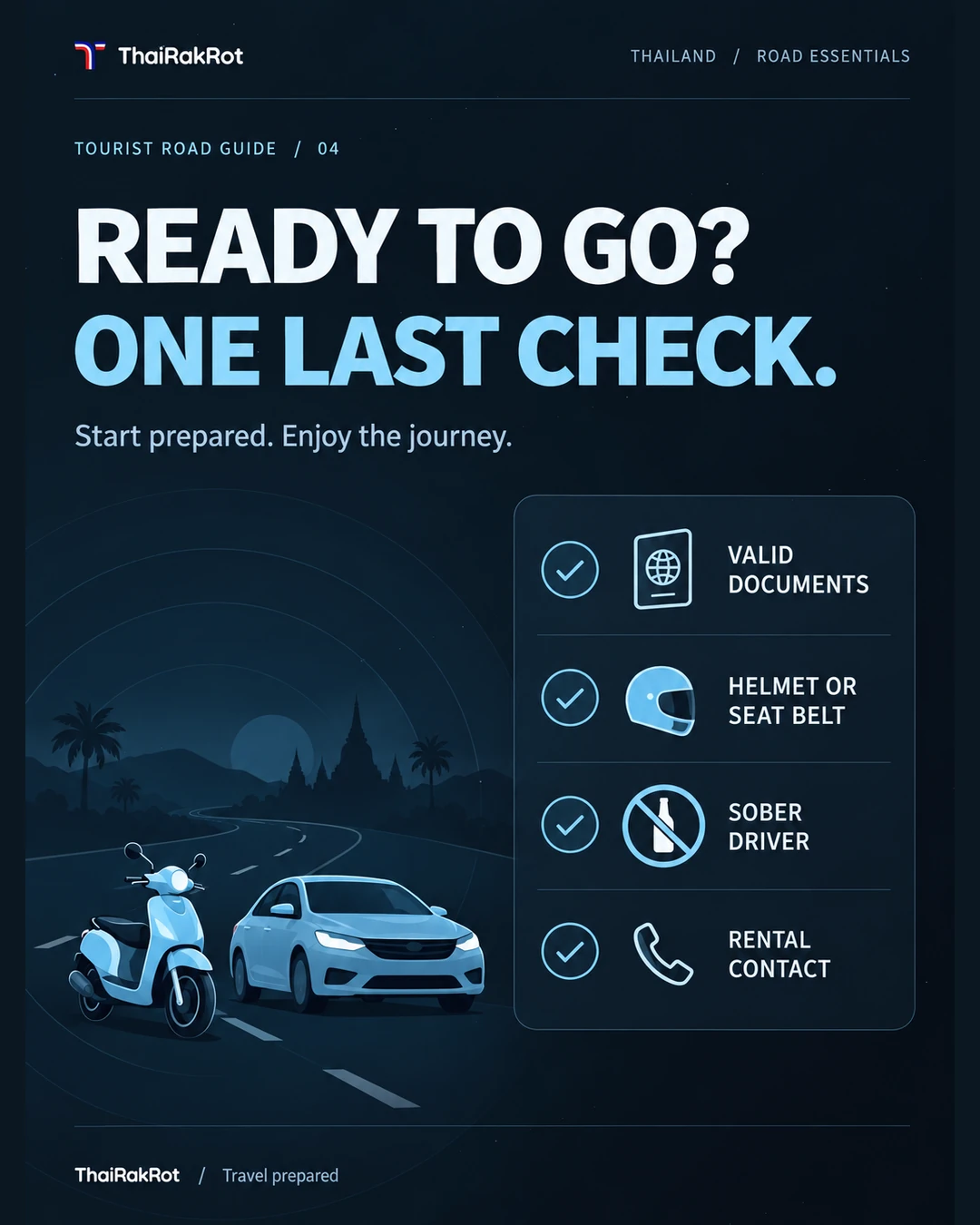
Before every rental journey
Keep your licence, required permit, agreement and rental contact accessible. Check brakes, tyres, lights, mirrors and safety equipment before leaving, and confirm insurance coverage with the provider. Agree how any later camera ticket will be handled. Save these numbers: Tourist Police 1155, police emergencies 191, medical emergencies 1669. Allow time to park legally and plan a safe way home; a short trip still needs the same preparation.