Part 2 of 3
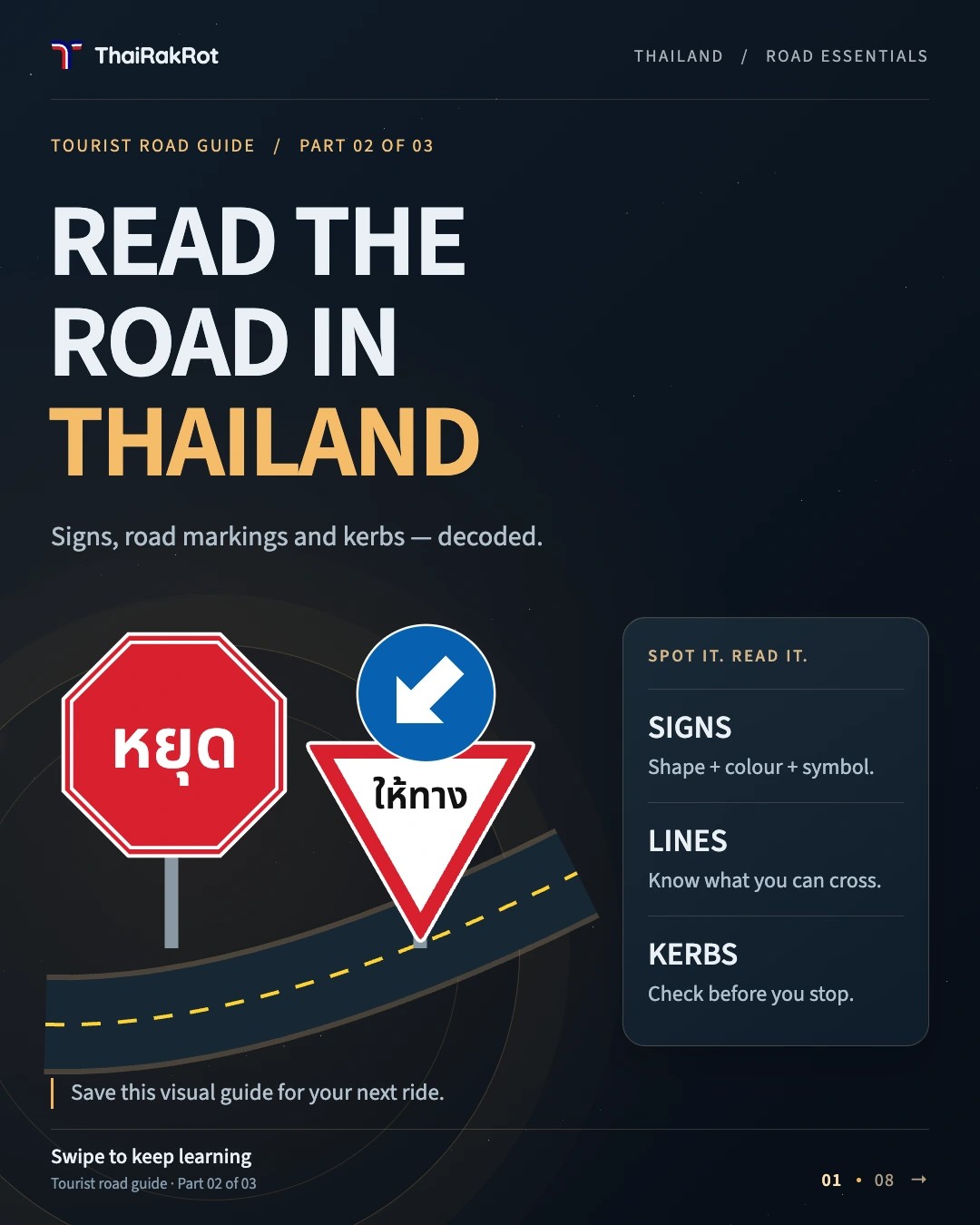
Read the road in Thailand
Recognise the signs, lane markings and coloured kerbs you will meet on your next ride — with clear illustrations of what they mean.
Read the guide8 illustrated cards in English, with the main points below. Select an illustration to open it at full size.
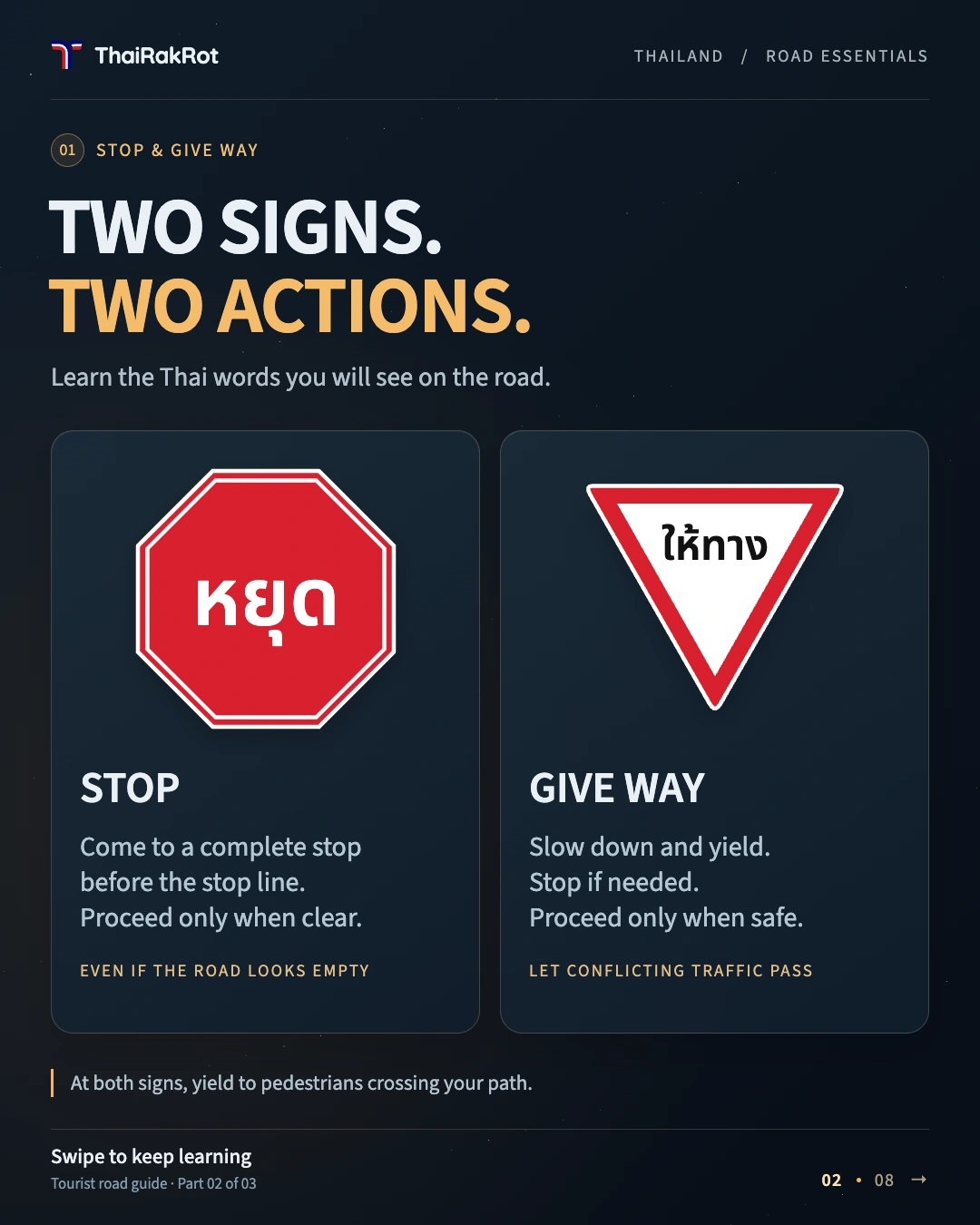
STOP and GIVE WAY
STOP requires a complete stop. GIVE WAY means slow down, yield and stop if needed. Stop before the line where required and let pedestrians cross safely.
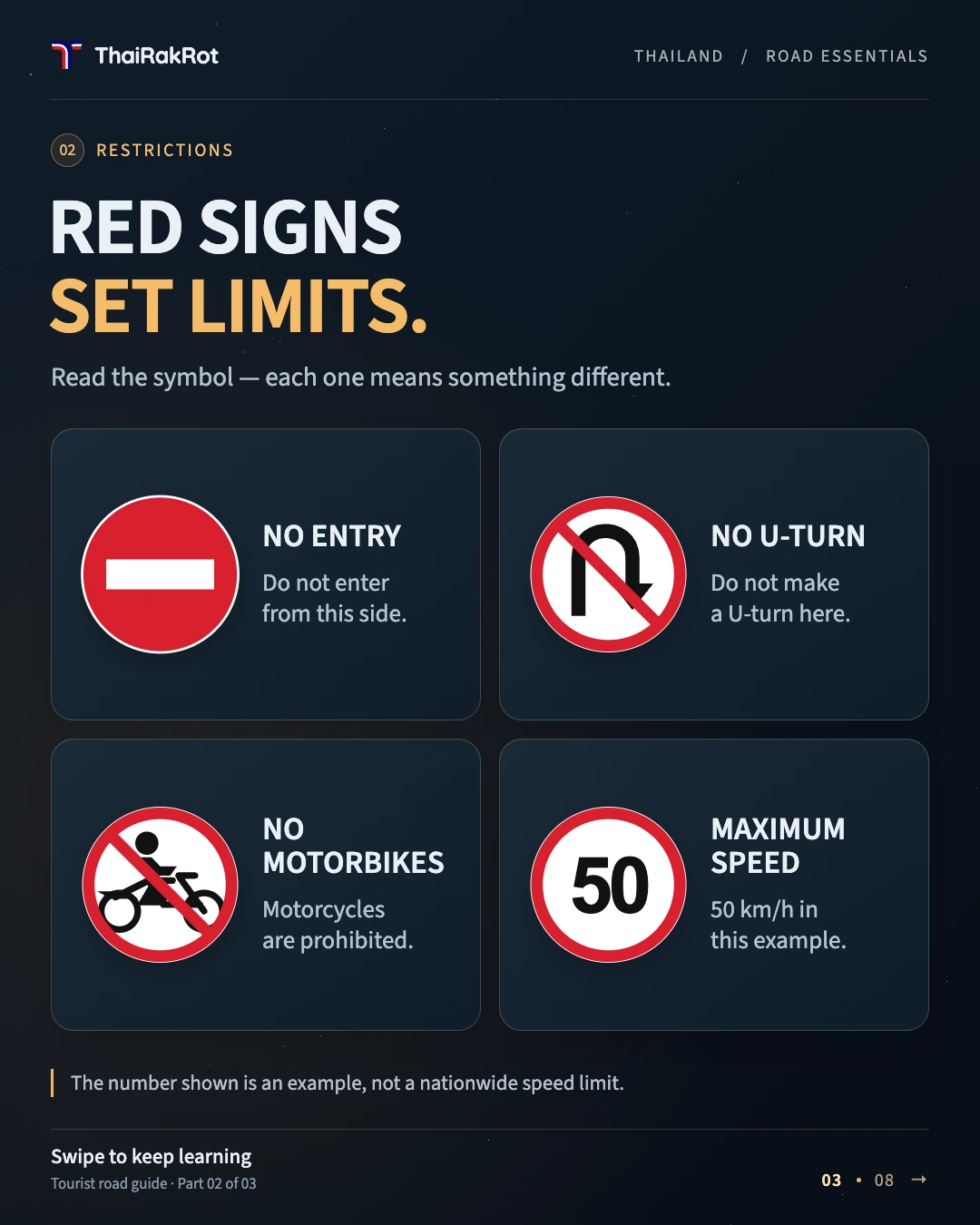
Prohibition signs
Recognise no entry, no U-turn, no parking and no stopping. No stopping is stricter than no parking. Read supplementary plates and any hours shown. The 50 km/h sign is an example.
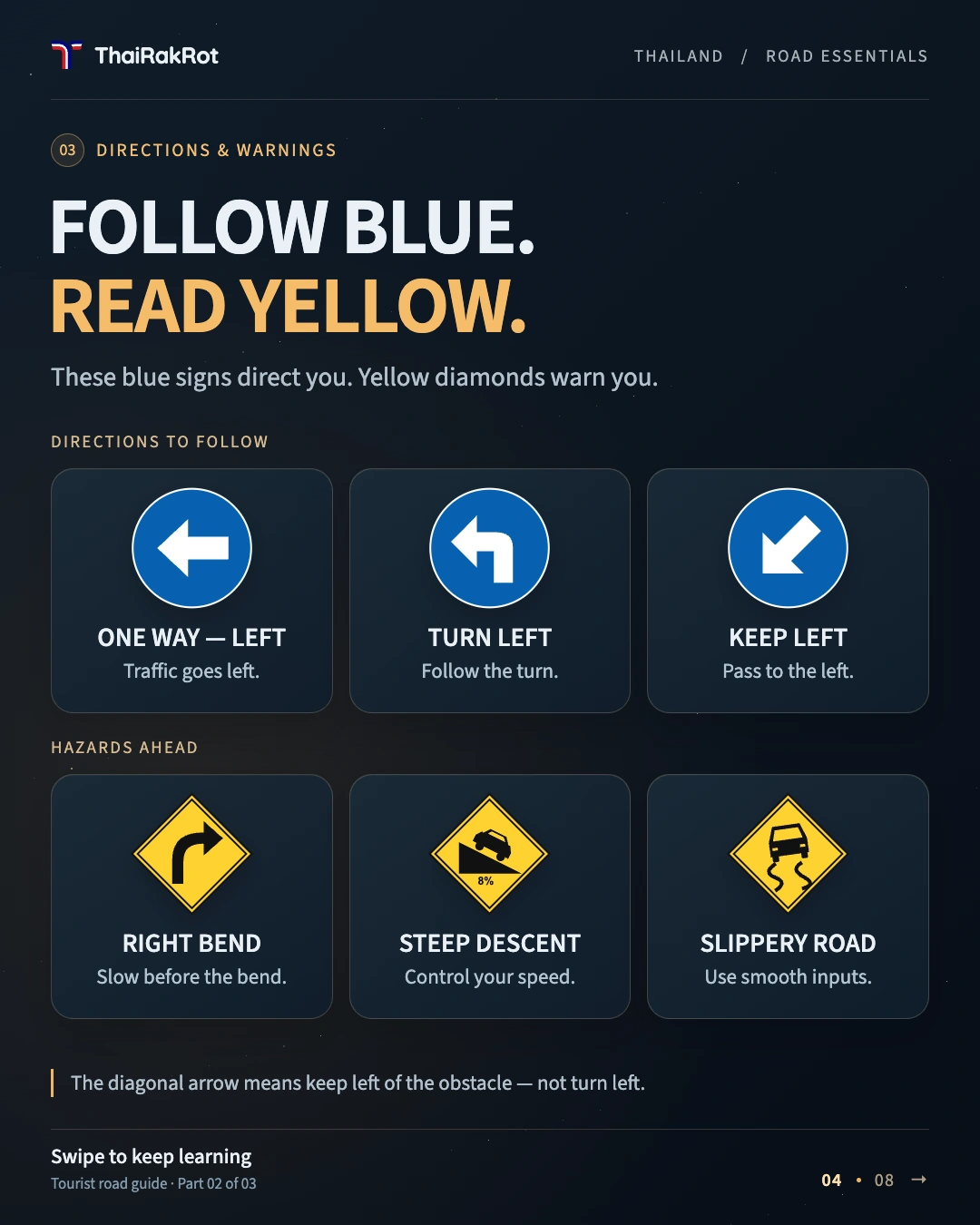
Direction and warning signs
A diagonal blue arrow means keep left of an obstacle; a bent arrow means turn left. Warning signs call for extra care at hazards ahead. The 8% descent shown is only an example.
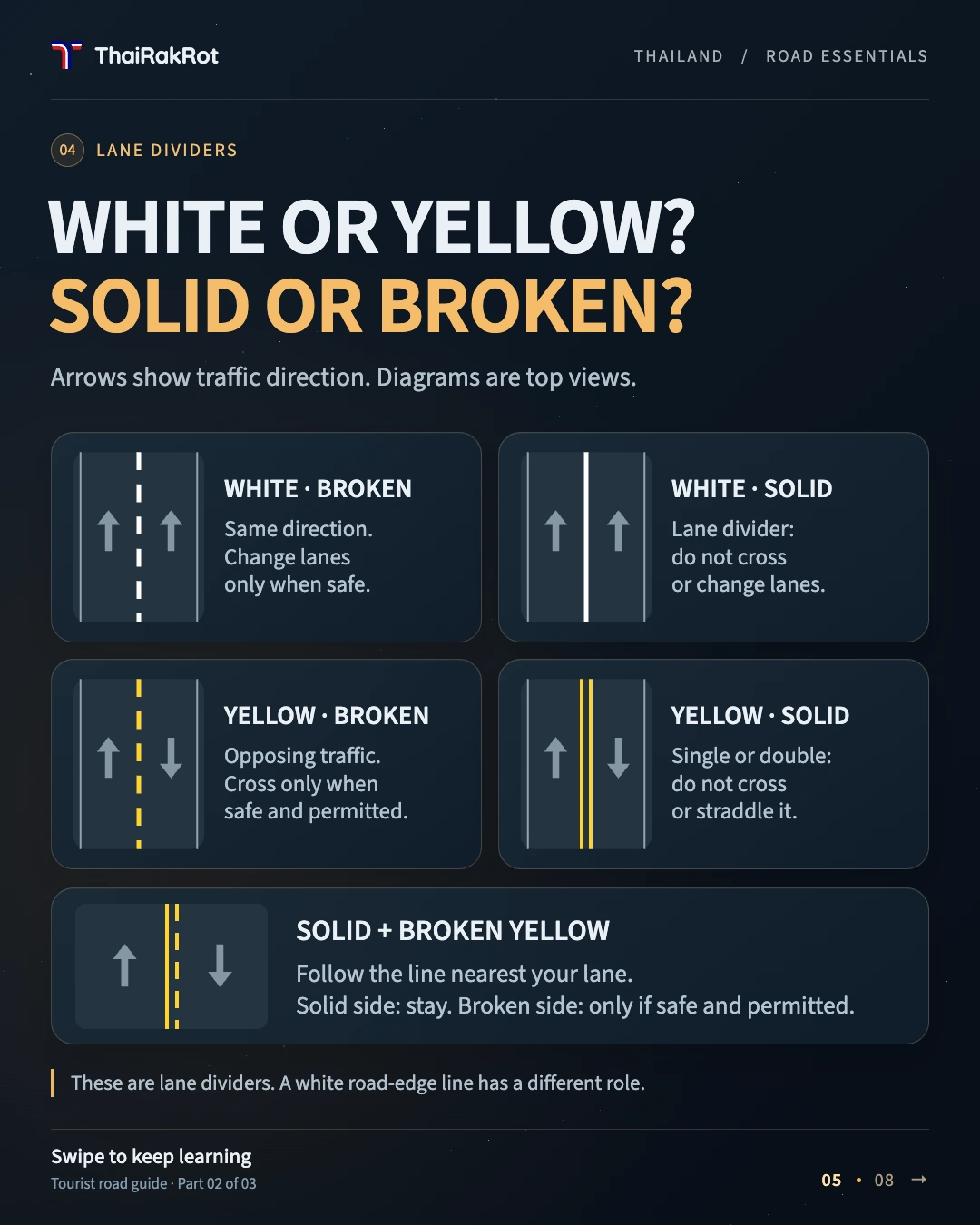
White and yellow lane lines
For the lane dividers shown, white separates traffic in the same direction and yellow separates opposing traffic. Stay on your side of a solid line. With a solid/broken pair, follow the line nearest you; cross a broken line only when permitted and safe.
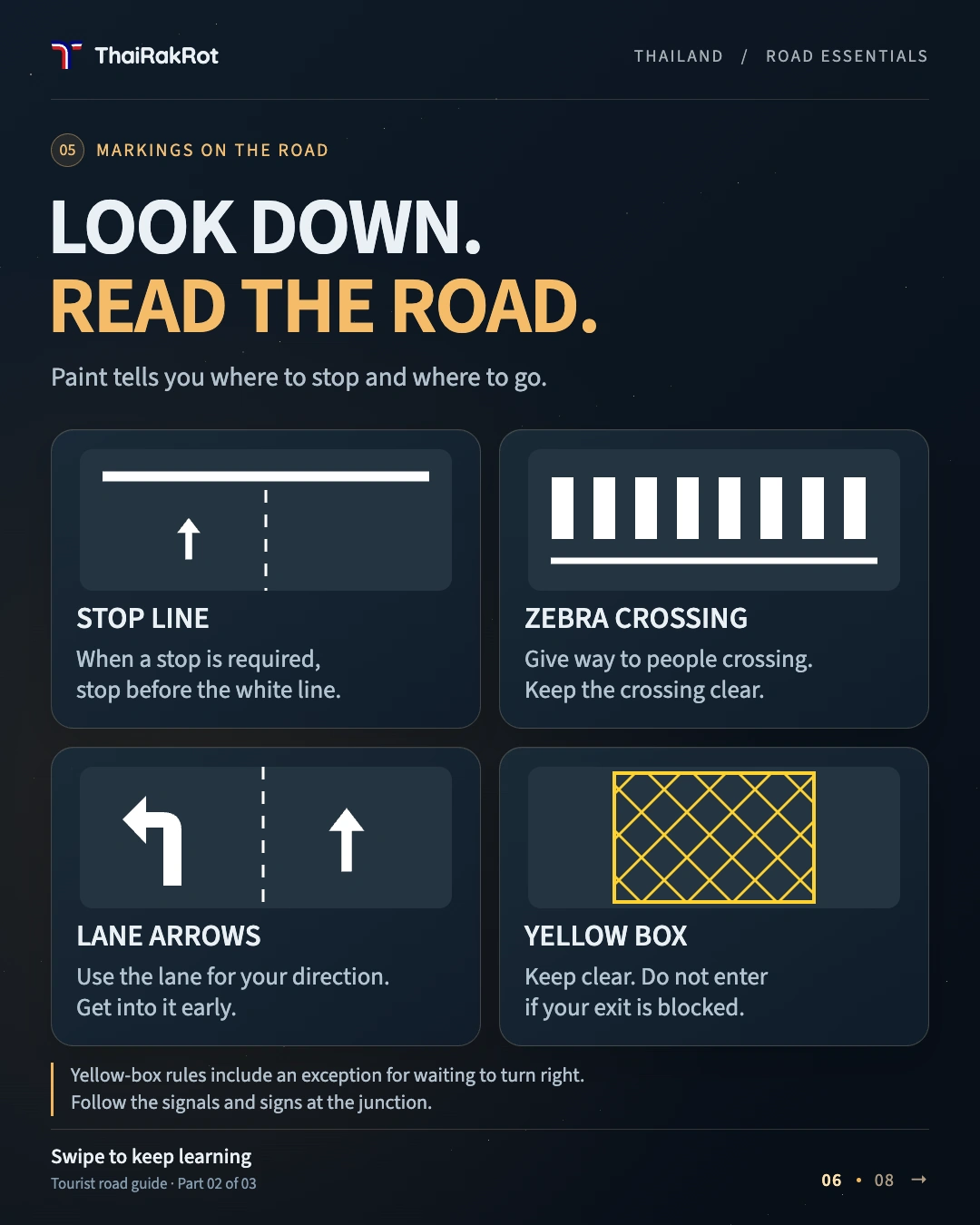
Markings on the road
Respect stop lines, pedestrian crossings and lane arrows. Keep a yellow box clear when your exit is blocked; the rules include an exception for waiting to turn right. Do not block people crossing your path.
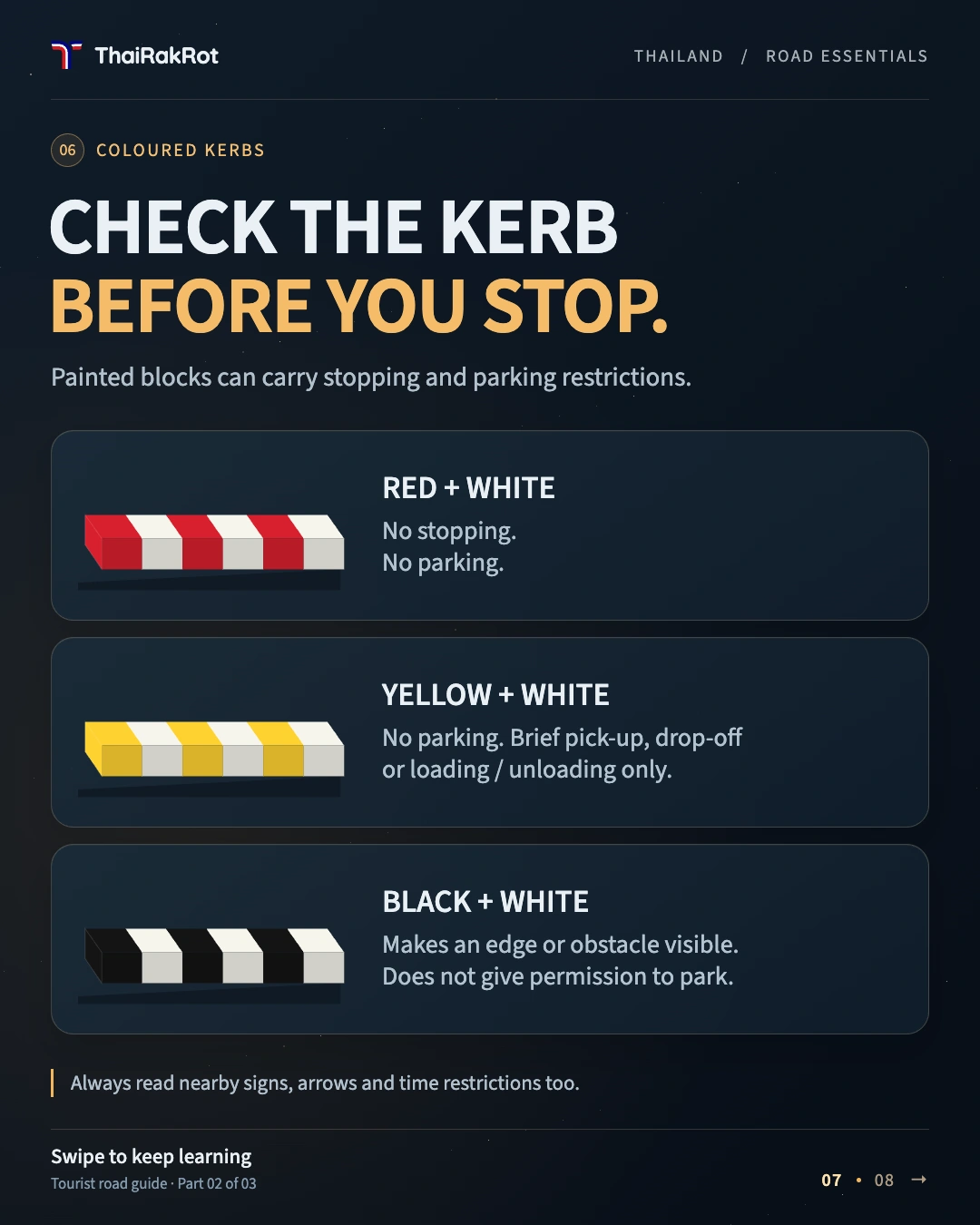
Coloured kerbs
Red/white: no stopping or parking. Yellow/white: no parking, only brief immediate pick-up, drop-off or loading. Black/white highlights an edge or obstacle and does not itself permit parking. Check nearby signs and times.
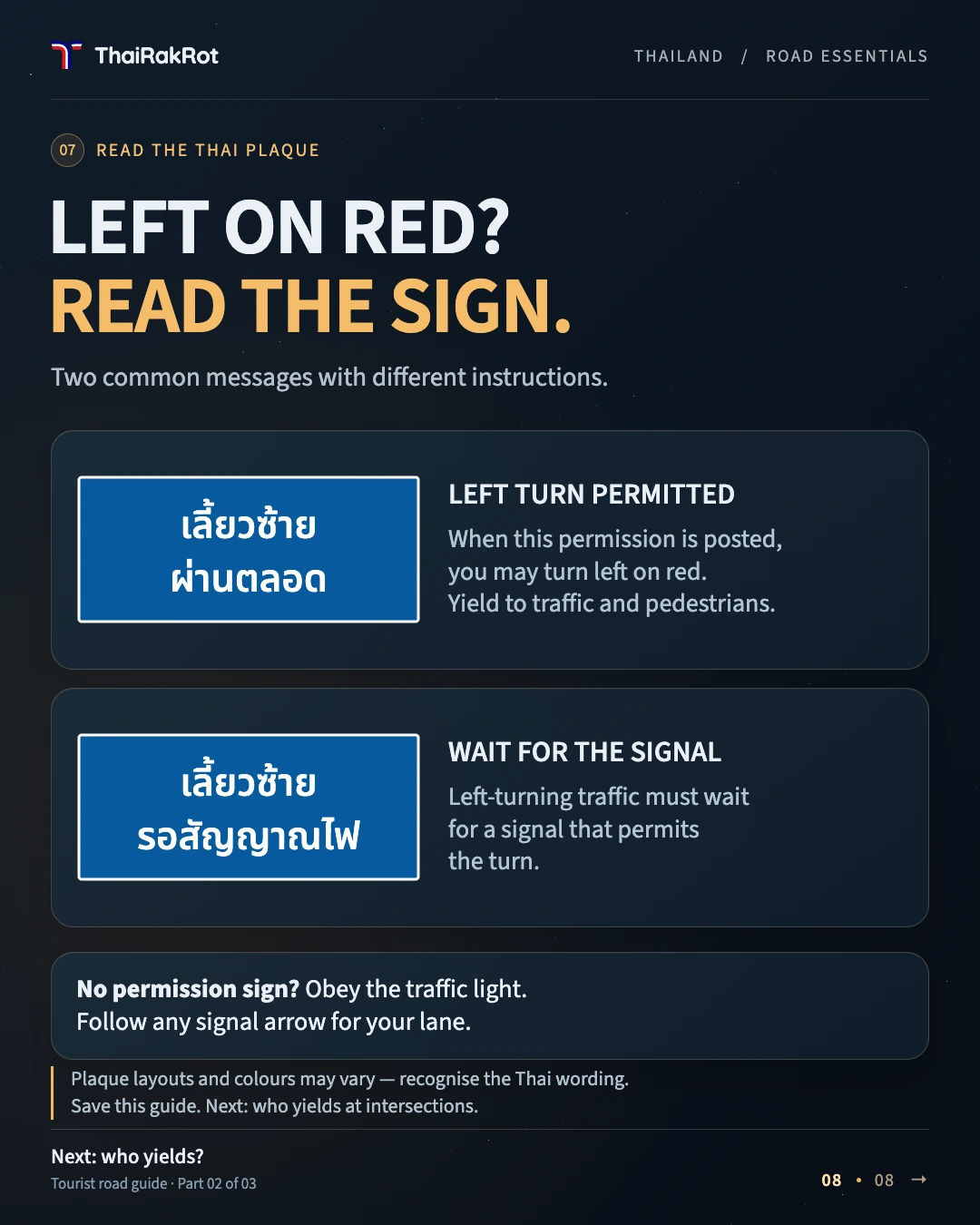
Turning left on red
Left on red is not automatic. “เลี้ยวซ้ายผ่านตลอด” indicates permission, but you must still yield. “เลี้ยวซ้ายรอสัญญาณไฟ” means wait for the light. Without permission, obey the signal and any arrow for your lane.